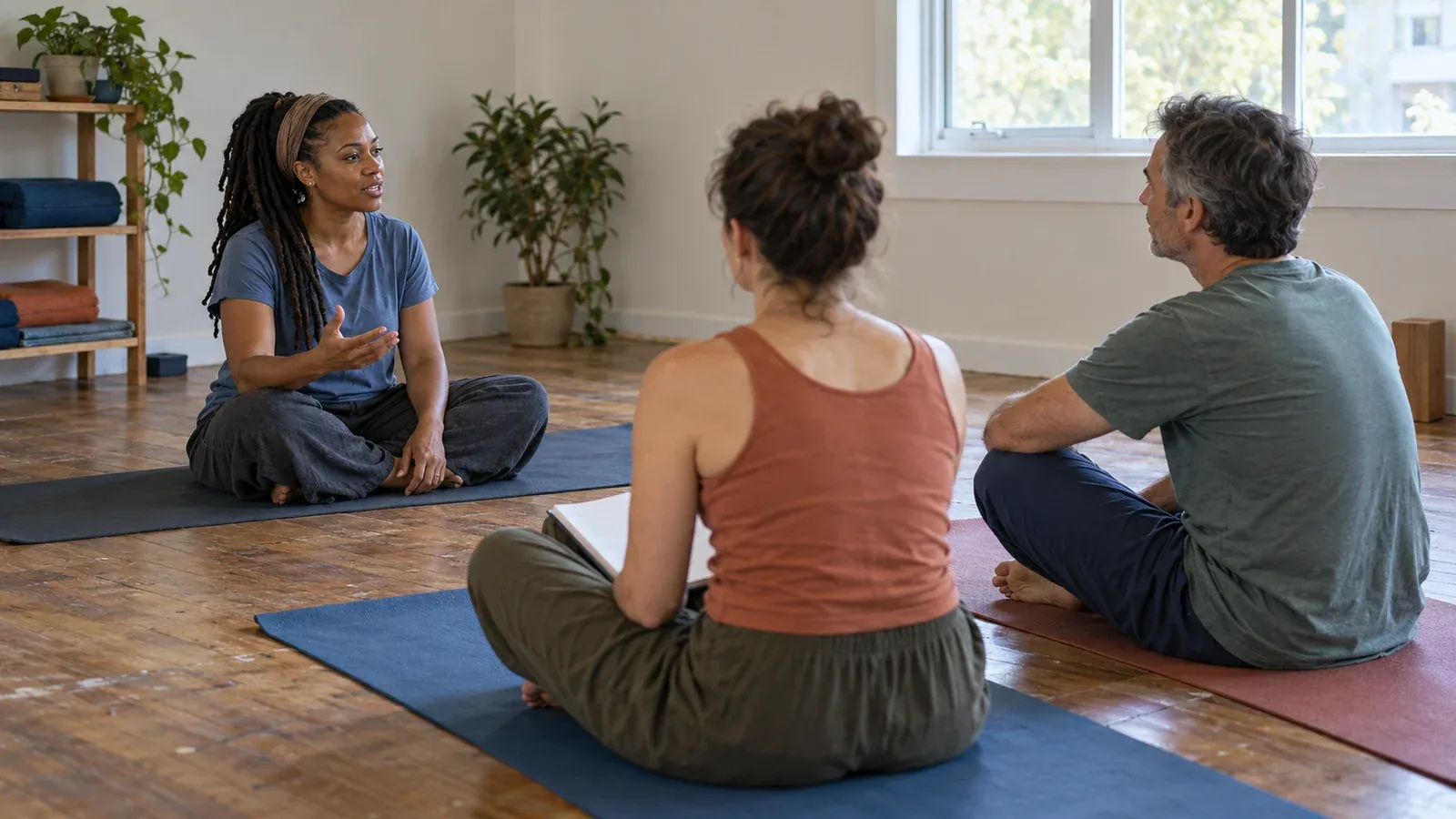
Schools describe the length of a 200-hour training in very different ways, and they can all be right, because the 200 counts hours of teaching, not days on a calendar. The useful question is not "what is the right length?" but "which shape of 200 hours will you actually finish and absorb?"
This guide explains what the number means, how the usual formats differ, and how to choose. It also shows where our own six-week format sits, and who it is not for.
The short answer
A 200-hour yoga teacher training is 200 hours of instruction, and schools spread those hours over very different calendars. Yoga Alliance sets the hour total and a daily ceiling, but we found no rule on how many weeks a training must last. Choose the shape you can attend fully, not the shortest or longest.
What does "200 hours" actually count?
It counts instructional hours, not days, weeks or months. Under Yoga Alliance's current standards for 200-hour programs, schools are asked for 200 hours across four educational categories: Techniques, Training and Practice; Anatomy and Physiology; Yoga Humanities; and Professional Essentials.
The same standards allow a school to teach in person, fully by distance learning, or a mix of both. For programs that use distance learning, Yoga Alliance requires at least 15% of the hours to be live online, with teachers and students together. For a 200-hour program it puts that at 30 hours.
There is also a daily ceiling. Yoga Alliance says it allows no more than 14 hours per day of instructional hours, and its page names no minimum. So within that ceiling, daily schedules can differ between programs. Ask each school for theirs.
What are the common ways to schedule 200 hours?
Programs vary, but they tend to fall into a few rough shapes. This is our own simplification, not a survey of schools, so always read each school's own schedule.
| Shape | What it looks like | May suit | Watch for |
|---|---|---|---|
| Compressed | A short, full-time block, which may be away from home | People who can clear their calendar and want to finish fast | Long days and little time to absorb between sessions |
| Immersive, several weeks | Full-time for a month or more, which may be residential | People who want to live the practice and step out of daily routine | Needs real time off from work and a place to stay |
| Extended or part-time | Evenings or weekends spread over months | People with jobs, families or a fixed home | Momentum may fade, and the finish line can feel far away |
None of these is the "serious" one. The best format is the one where you can show up rested, do the practice teaching, and finish.
Is a longer training better than a shorter one?
Not automatically. A longer calendar gives more time between sessions, which may help some people and cost momentum for others. One large review of spacing research found that the best gap between study sessions depends on how long you need to remember the material. It looked at verbal recall tasks, so it says little about learning to cue a pose, and it is not evidence for or against any course length.
What matters more than calendar length is what happens inside the hours:
- How much of the time are you practicing teaching, with feedback, rather than listening?
- Who watches you teach, and how is your skill assessed at the end?
- What support exists after the final day?
In our view, a shorter training with strong practice teaching may teach more than a longer one with little of it. Ask each school to show you where those hours fall.
Which length fits your life?
Match the format to your constraints first, and your preferences second.
- Can you step away from work and home? If yes, an immersive block is possible. If not, an extended format is realistic, and a hybrid format may be worth asking about.
- How do you learn best? Some people learn fastest when they are fully immersed. Others need weeks to let each lesson settle.
- What happens after? If you plan to teach soon after, check what mentoring and refresher study the school offers.
- What is the total cost, not just tuition? Longer, residential formats add accommodation, meals and travel. Our cost guide shows how to budget for that.
- How much stretch can you carry? A training should challenge you. It should not leave you too tired to learn.
Where does our six-week format fit?
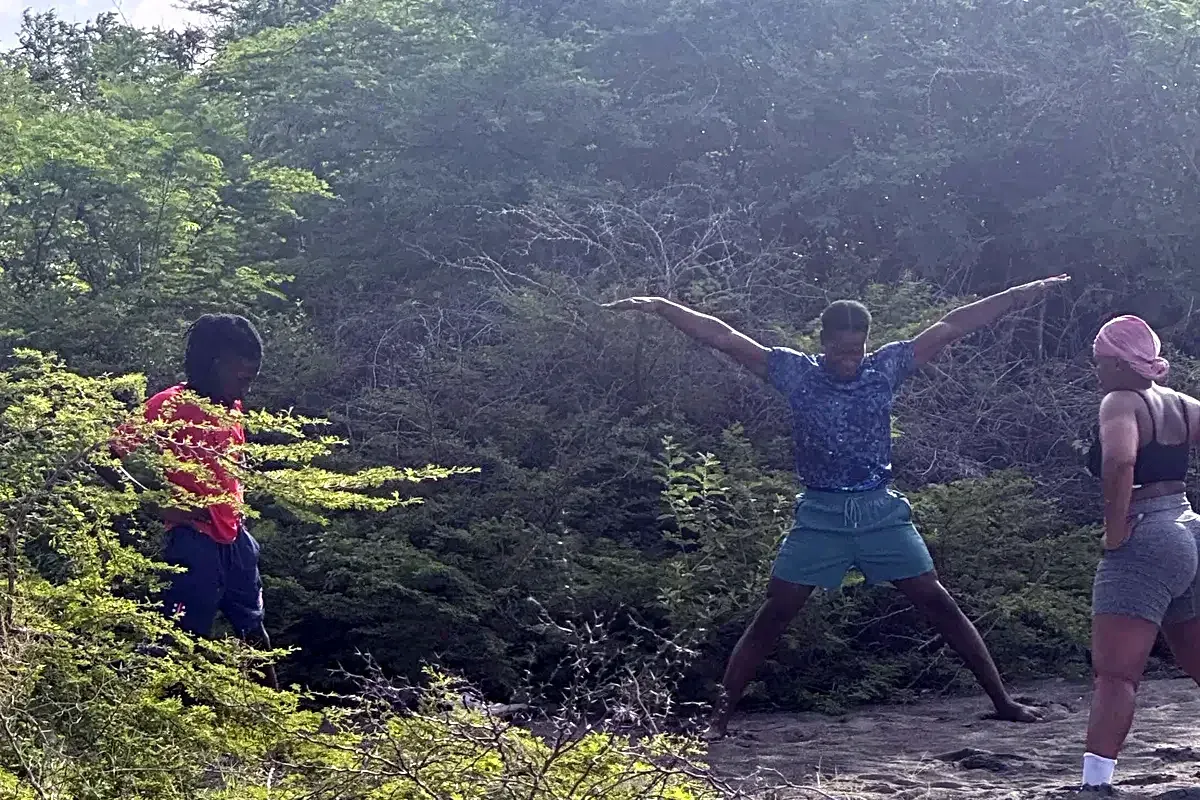
Our 200-hour training runs for six weeks, in person at the YAI Wellness Oasis in Pondside, Yallahs, St. Thomas, Jamaica. Plan leave from work, travel and a place to stay for that stretch.
Certification requires passing an individual teaching skill assessment; attending the course alone does not certify you. Apprenticeship with certified Yoga Angels teachers helps you prepare, and the assessment is scheduled when you are ready. Tuition is $3,000, and accommodation and meals are arranged separately. You can see upcoming dates and the full outline on our 200-hour training page.
Forty-two days is a lot, and we do not pretend otherwise. It is the right shape when you want to leave your normal routine behind and practice every day among others doing the same. It is the wrong shape if you cannot be away that long. In that case, ask us about hybrid and online options, and we will talk through which one fits.
If you are still deciding between levels, our guide to 200-hour versus 300-hour training is a good next read.
Seven questions to ask any school about its schedule
- How many hours per day, and on how many days per week?
- Which hours are live and which are self-paced?
- How many hours are practice teaching, and who gives feedback?
- How is my teaching assessed at the end?
- What happens if a student misses a session or falls ill?
- What support do graduates get after the last day?
- What does the full price cover, and what is extra?
A clear school answers these without hurrying you. Write the answers down and compare them side by side. If you are weighing a school for registration, check its status in the Yoga Alliance directory yourself rather than relying on its own wording.
Frequently asked questions
How many weeks does a 200-hour yoga teacher training take?
It depends on the school. The 200 counts instructional hours, so the same hours can be taught over a few weeks, about six weeks, or several months of weekends and evenings. Ask for the daily schedule before you compare programs.
Is a 200-hour training possible while working full time?
It can be, if a school offers an evening or weekend format. Check how many sessions you can miss and how missed hours are made up.
Is there a minimum number of days for a 200-hour training?
We found no minimum number of days in Yoga Alliance's published standards. Its policy sets a ceiling of 14 instructional hours per day and names no minimum, so schedules are left to each school.
Does an online 200-hour training count the same?
Yoga Alliance's standards allow fully online, fully in-person and mixed formats, and a program that uses distance learning must deliver at least 15% of its hours live online. Whether a format suits you is a separate question, so ask how practice teaching and feedback are handled.
How long is the 200-hour training at Yoga Angels?
Our in-person training runs for six weeks at the YAI Wellness Oasis in Jamaica. Hybrid and online options are available on request, so book a call to talk through which format fits you.