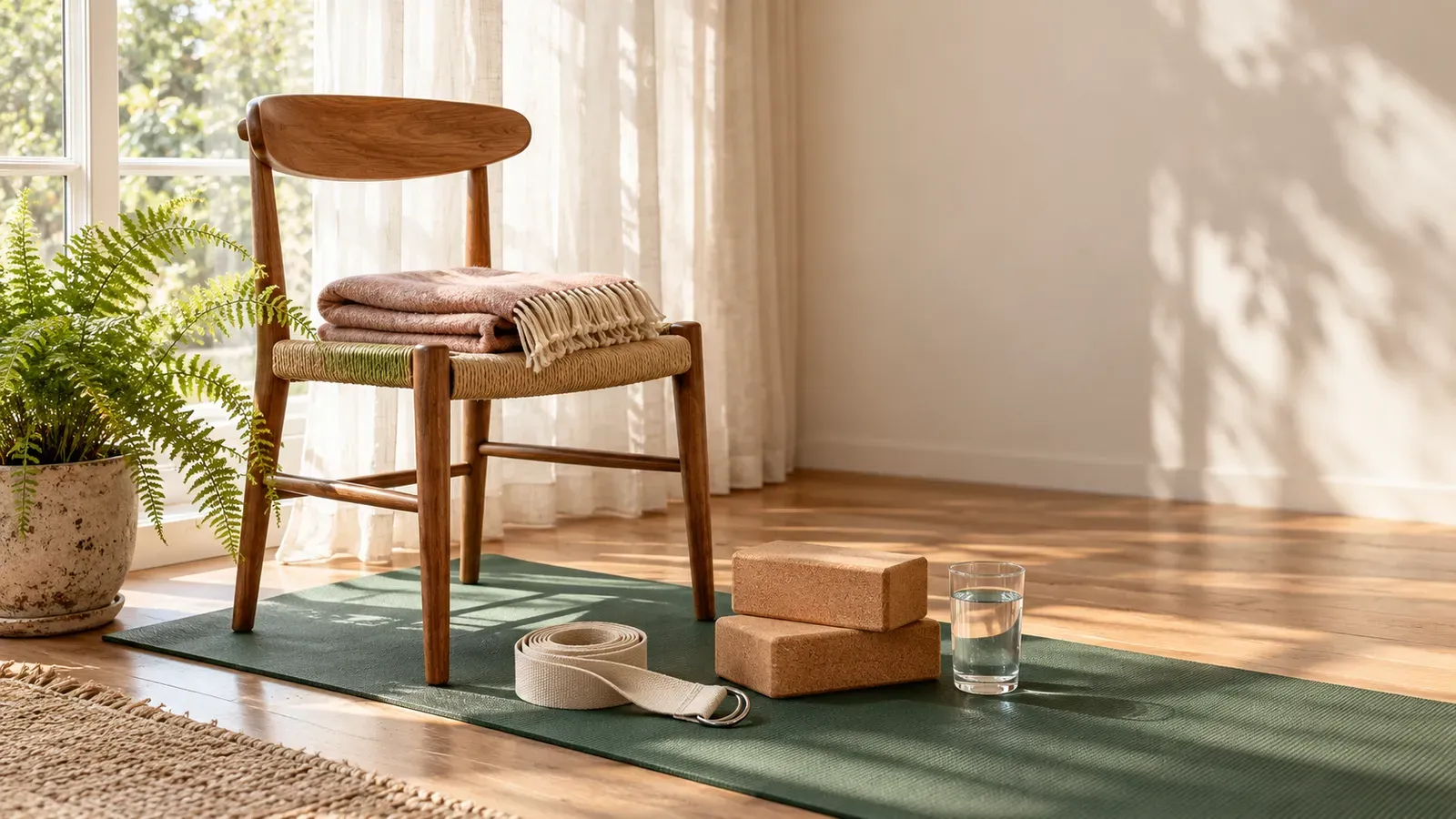

Your first sound bath is usually simpler than its name suggests. You remain clothed, get comfortable, and spend the main part of the session listening, not performing. The guide below explains the practical details and the boundaries that matter.
What should you expect at a sound bath?
Expect a quiet, guided rest: you arrive, settle on a mat or in a chair, and listen while a facilitator creates live sound. You stay clothed and can adjust your position, move, or leave if needed. You might feel calm, sleepy, emotional, restless, or unchanged. None of those responses is wrong.
What is a sound bath and what do you do?
A sound bath is a guided listening experience in which you rest while sound fills the room. There is no water and no pose to perform. You may lie down or sit, close your eyes or keep them open, and follow the sound in whatever way feels comfortable.
The exact setup depends on the facilitator. A sound bath may include instruments such as gongs, singing bowls, tuning forks, or chimes, but one session can sound very different from another. Cleveland Clinic's overview of sound baths also notes that people commonly lie down, while a supportive chair is an option.
Think of the session as protected listening time, not a test of meditation skill. You do not have to clear your mind, understand every sound, or produce a particular result.
How do you prepare for your first sound bath?
The best preparation is practical: check the format, make your body comfortable, and tell the facilitator what you need. You do not need yoga experience, flexibility, or previous meditation experience.
Before you go:
- Read the listing. Confirm the start time, expected length, location, and whether the session is group, private, part of a retreat, or part of an event.
- Wear comfortable layers. Choose clothes that let you sit or lie down without constant adjustment. Bring a warm layer if you tend to get cold.
- Ask what is provided. Check whether you should bring a mat, blanket, pillow, or eye covering. If you are joining us at YAI, ask what is available for that particular session.
- Arrive with enough time to settle. You may want to choose a position, use the restroom, and tell the facilitator about an injury, sound concern, or need to leave easily.
- Choose an intention, or do not. You might hope to rest, reflect, pray, or simply be curious. You can also arrive without a goal.
If lying flat is uncomfortable, ask if you can sit in a chair or support your knees. Comfort is more useful than trying to copy everyone else in the room.
What happens during a sound bath?
Most sessions move through a simple arc: an introduction, a period of listening, and a gradual return to the room. The facilitator should explain the format and what to do if you need to move or step out.
You may experience the session in four stages:
- Welcome and orientation: You hear the timing, practical guidance, and any room expectations.
- Settling in: You lie down or sit, adjust your support, and choose whether to close your eyes.
- Listening: The sound changes over time. You can pay close attention, let it sit in the background, or notice your thoughts and return to listening.
- Re-entry: The sound ends or softens. Take a moment before sitting up, gathering your things, and returning to ordinary conversation.
Small adjustments are allowed. You can shift your legs, scratch an itch, cough, use the restroom, or leave quietly if you need to. If you are unsure about etiquette, ask the facilitator before the sound begins.

What does a sound bath feel like?
There is no single sound bath feeling. You may notice physical ease, drowsiness, a quieter mind, emotion, boredom, restlessness, or no obvious change at all. Falling asleep is possible when you are lying still, and waking up without a dramatic experience is also completely normal.
Research deserves a careful reading. In an observational study of 62 adults, participants reported less tension, anger, fatigue, and depressed mood after a singing-bowl sound meditation. The study was not randomized and had no control group, so it cannot show that sound alone caused the changes or that sound baths treat a medical condition. Read the full study in PubMed Central for the methods and limitations.
You may yawn, fidget, or feel emotional. None of those responses is a requirement, and none proves that the session worked. If a feeling becomes overwhelming, change position, step outside, and ask for support.
Is a sound bath safe for everyone?
A sound bath is a wellness experience, not a replacement for diagnosis, treatment, or medication. If sound is painful for you, lying down is difficult, or a group setting has caused problems before, ask the facilitator about the setup and speak with a clinician when appropriate.
If you have epilepsy or a known seizure trigger related to sound or music, speak with your healthcare professional and the facilitator before attending. The Epilepsy Foundation explains that sounds can trigger seizures for some people, while simple sound-induced seizures are very rare. Do not stop prescribed treatment or use a sound bath in place of medical care.
A sound bath is also different from clinical music therapy. Music therapy is planned by a qualified music therapist within a therapeutic relationship and may include assessment, goals, active music-making, or directed listening. A sound bath is generally a guided wellness listening experience. Cleveland Clinic explains what clinical music therapy involves.
How is a Bhakti sound bath different from a regular sound bath?
A Bhakti sound bath adds a devotional frame to the listening experience. Bhakti is generally translated as devotion and can refer to traditions in which devotees experience a direct relationship with the divine, as Oxford Bibliographies in Hinduism explains.
That does not mean every participant must use the same language or hold the same beliefs. It does mean you should ask what the session includes if you want a clearly secular experience or if devotional language matters to you.
At YAI, we offer Bhakti sound baths in group and private formats, and as part of retreats and events. Our YAI Wellness Oasis is oceanfront in Pondside, Yallahs, St. Thomas, Jamaica, about 40 minutes from Kingston. You can read our Bhakti sound bath details and ask us about the format before booking.
| Format | May suit you if you want | Ask before booking |
|---|---|---|
| Group sound bath | Shared listening and rest | How long is it, and what is the expected group setup? |
| Private session | A more personal conversation about comfort and format | Can the session be adapted to your needs? |
| Retreat or event session | Sound within a wider programme | What happens before and after the sound bath? |
Our One Day For You day experience and Wellness Weekend Retreats have their own details. Do not assume a sound bath is included in a day visit. Ask us about separate availability for the date and format you are considering. If you are planning a wider visit, our St. Thomas travel guide may help with the surrounding area.
How long does a sound bath last, and what should you do afterward?
There is no universal length. Sessions vary by facilitator and format, so use the event listing or ask before booking instead of assuming every sound bath lasts the same amount of time. Cleveland Clinic also notes that the length varies and that there is no single optimum duration.
After the sound ends, sit up slowly and give yourself a few unhurried minutes. Drink water if you want it, notice how you feel, and avoid judging the experience too quickly. You do not need to explain a tear, a nap, a busy mind, or the feeling that nothing happened.
Frequently asked questions
Do I need to know how to meditate before a sound bath?
No. You only need to be willing to rest and listen. If your mind wanders, notice it and return to the sound, your breathing, or the feeling of your body supported by the floor or chair.
Can you fall asleep in a sound bath, and what if you snore?
Yes, sleep can happen when you are resting quietly. If snoring worries you, tell the facilitator before the session and choose a position that lets you leave easily. You do not need to stay awake to do the experience correctly.
What should I wear to a sound bath?
Wear comfortable clothing and layers that let you sit or lie down without distraction. Ask whether the venue provides a mat, blanket, pillow, or chair, and bring what you need for your own comfort.
Why did I feel emotional during a sound bath?
Quiet attention can bring feelings into awareness, but there is no single explanation for an emotional response. Let yourself pause, breathe, change position, or step outside. If distress continues after the session, speak with a qualified mental health professional rather than treating the sound bath as therapy.
Is a sound bath religious or spiritual?
It depends on the facilitator and the format. Some sessions are described mainly as relaxation and listening, while others use spiritual or devotional language. Ask what to expect before you book. At YAI, Bhakti identifies the devotional frame of the offering, and we are happy to explain the format.